


Defense Secretary Pete Hegseth has removed the Army’s top general along with two other senior officers in a sweeping wartime shakeup, dramatically expanding a leadership purge inside the Pentagon as the Iran war intensifies.
Hegseth asked the top official to step down and take immediate retirement, as initially reported by multiple new outlets and confirmed to Military.com by the Pentagon. The department said George will retire effective immediately. Defense officials also said the shakeup includes Gen. David Hodne, who leads the Army’s Training and Doctrine Command, and Maj. Gen. William Green Jr., the Army’s chief of chaplains. The removal of multiple senior officers marks one of the most significant wartime leadership shakeups during active U.S. combat operations in recent years. No official explanation has been publicly provided.

Sean Parnell, assistant to the secretary of defense for public affairs, said in a statement posted on X that George “will be retiring from his position as the 41st Chief of Staff of the Army effective immediately,” adding that the department is “grateful for General George’s decades of service.”
Military.com reached out for comment to the Defense Department, the U.S. Army and the White House.
Gen. Christopher C. LaNeve, the Army’s vice chief of staff, is expected to serve as acting chief of staff, according to multiple reports, ensuring continuity as operations continue.
Congressional reaction is likely, particularly from the Armed Services committees that oversee senior military leadership and wartime operations.
The Pentagon has not detailed how the transition will affect ongoing operations, leaving open questions about whether the leadership changes could influence planning, coordination with allies or execution as the war continues to evolve.
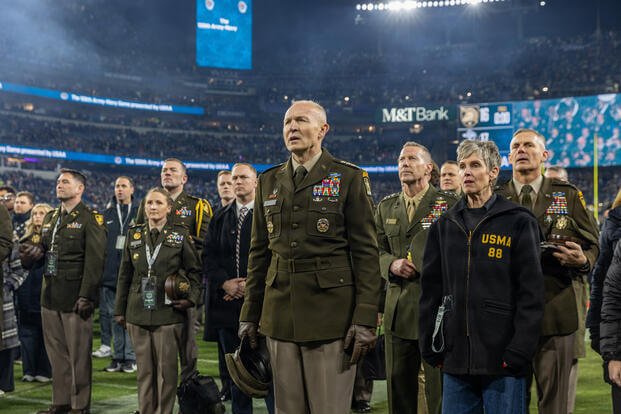
The Generals Caught in the Shakeup
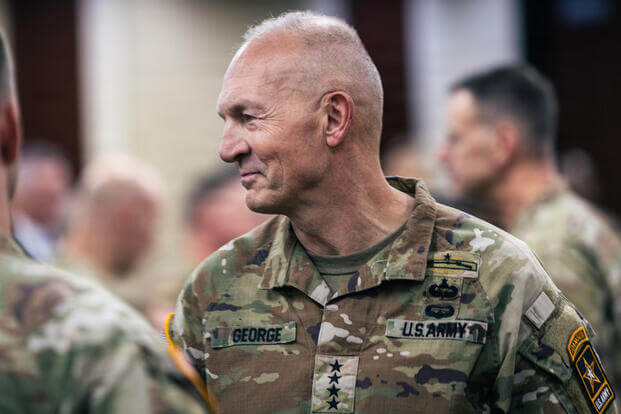
Gen. Randy A. George, a four-star general and career infantry officer, has served as the Army’s 41st chief of staff since September 2023 after being nominated by then-President Joe Biden and confirmed by the Senate. He enlisted in the Army in 1982 before commissioning from the U.S. Military Academy at West Point in 1988 and has spent more than four decades in uniform, including combat deployments during the Gulf War, Iraq War and war in Afghanistan.
George previously served as vice chief of staff of the Army and as senior military assistant to the secretary of defense, placing him at the center of Pentagon decision-making before taking the Army’s top job. As chief, he led a sweeping Army Transformation Initiative aimed at restructuring the force and preparing it for large-scale combat operations, including the creation of new commands and modernization of weapons and doctrine.
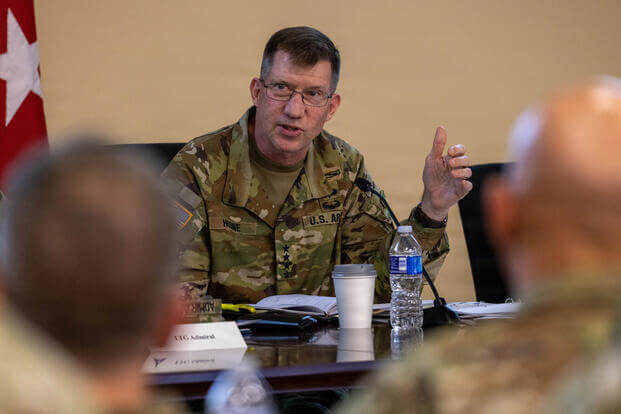
Gen. David Hodne, a former Army Ranger, has led the Army’s Transformation and Training Command, which supports training, readiness and broader efforts to modernize the force for future conflicts. His command was expanded under George as part of broader modernization efforts, making it central to how the Army adapts to evolving battlefield threats.
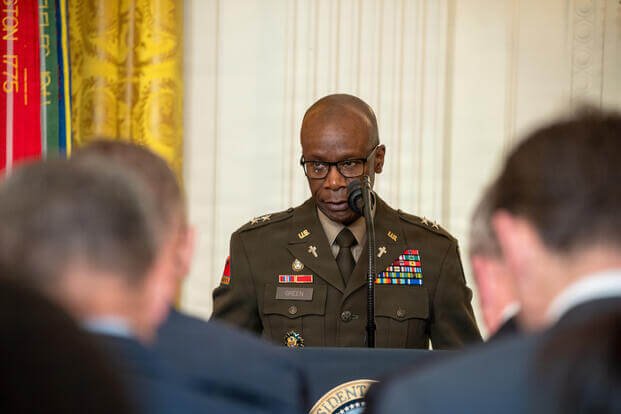
Maj. Gen. William Green Jr., the Army’s chief of chaplains, has overseen religious support across the force and advised senior leaders on troop welfare and morale. A former enlisted soldier who later became an ordained minister, Green has served as a chaplain since the 1990s and deployed in support of operations in Iraq. He became the Army’s chief of chaplains in 2023 and was only recently promoted to major general.
His role has drawn increased attention as Hegseth has pushed changes to how military chaplains operate, placing the position at the center of broader cultural and policy debates inside the Pentagon.
Shakeup Expands as War Pressure Builds
The removals come as the conflict enters what officials have described as a decisive phase, with U.S. forces continuing strikes across Iran while broader fighting and pressure on key shipping lanes near the Strait of Hormuz continue to build across the region.
The strategic importance of the Strait of Hormuz has grown as attacks on commercial vessels and threats to shipping routes have raised concerns about global energy flows and the potential for wider economic disruption.
The war has expanded beyond its initial targets, disrupted energy markets and increased pressure on U.S. military leaders to manage a fast-moving regional conflict, with concerns rising about broader instability and the potential for a prolonged energy crisis.
George’s removal follows a series of high-level personnel changes under Hegseth, who has taken a more direct role in military leadership decisions since leading the Pentagon.
The timing is drawing scrutiny as the war enters a more volatile and uncertain phase, with officials warning the coming days could shape the trajectory of the conflict.





