


Escalation is accelerating as the Pentagon prepares its largest strike package yet against Iran, signaling a new phase of the conflict with growing risks to global energy markets.
The latest Pentagon briefing signals an expanded phase of operations as the U.S. prepares larger strikes and rising tensions in the Strait of Hormuz threaten global energy flows.
Officials said the next round of operations would be even larger, with the Pentagon preparing what Defense Secretary Pete Hegseth described as the most significant strike package of the conflict so far.
“Today will be the largest strike package yet,” Hegseth said Thursday in Washington.
Military.com reached out for comment to the Defense Department, U.S. Central Command, the U.S. Navy, the White House and the State Department.
Targets have expanded beyond initial missile and air defense sites to include Iran’s defense industrial base, underground facilities and naval infrastructure, reflecting a shift toward dismantling Tehran’s ability to sustain long-term operations.

Senior military leadership said U.S. forces are now striking deeper into Iranian territory with improved intelligence and faster targeting cycles, allowing forces to identify and hit assets as they emerge from hardened or underground positions.
“To date, we’ve struck over 7,000 targets across Iran and its military infrastructure,” Hegseth said.
“That is not incremental; that is overwhelming force applied with precision,” he added.
US Strikes Cripple Iran Military Capabilities
Pressure is mounting as U.S. strikes hammer Iran’s missile, drone and defense production networks, sharply degrading the country’s ability to sustain attacks across air, land and sea.
“Iran’s air defenses [are] flattened,” Hegseth said, adding that missile and drone production facilities are being “overwhelmingly destroyed.”
Strikes have expanded beyond launch sites to include manufacturing hubs, storage facilities and underground infrastructure tied to Iran’s missile and unmanned aerial vehicle programs, targeting the systems that allow Tehran to regenerate combat power.

“We continue to attack deeper into Iranian territory,” Joint Chiefs Chairman Gen. Dan Caine said, describing an expanding operational footprint.
Ballistic missile attacks against U.S. forces have dropped roughly 90% since the start of the conflict, according to Hegseth, with similar declines in one-way attack drones.
Senior military leadership said the degradation reflects sustained pressure on Iran’s defense industrial base, limiting its ability to replace weapons and maintain operational tempo.
Still, officials said Iran retains limited strike capability and continues to launch attacks across the region.
“They will still shoot, we know that,” Hegseth said. “But they would shoot a lot more if they could, but they can’t.”
Iran Navy Paralyzed in Strait of Hormuz
Fighting is intensifying at sea as U.S. forces hammer Iran’s naval fleet, mine-laying capabilities and maritime infrastructure across the Strait of Hormuz, a critical chokepoint for global oil shipments.
“We’ve damaged or sunk over 120 of their navy ships,” Hegseth said, adding Iran’s surface fleet “is no longer a factor.”
Strikes have targeted fast attack craft, mine layers, naval bases and storage sites used to support maritime operations, reflecting a broader effort to eliminate Iran’s ability to threaten commercial shipping.
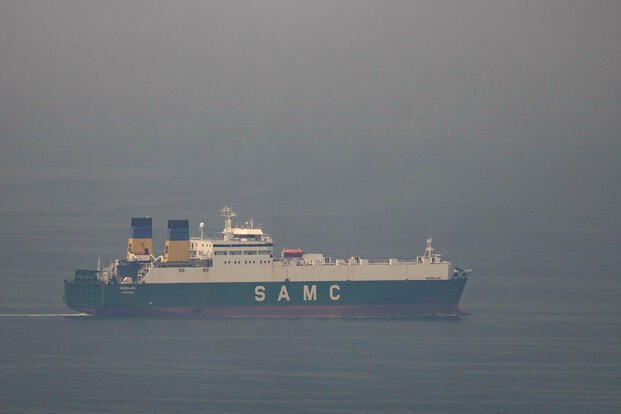
Senior military leadership said U.S. forces are now operating deeper into Iranian territory while continuing to strike naval assets, ammunition depots and mine storage facilities.
“We are targeting mine-laying capabilities and naval assets,” Caine said.
A-10 aircraft and AH-64 Apache helicopters have entered the fight along the southern flank, targeting fast-attack craft and reinforcing efforts to secure one of the world’s most vital energy corridors.
The Strait of Hormuz carries roughly 20% of the world’s oil supply, making it a central front in the conflict as U.S. forces work to prevent disruptions that are already rippling across global energy markets. In the U.S., gas prices have reached levels not seen since the COVID-19 pandemic.
Recent reporting by Military.com highlighted attacks on commercial shipping and energy sites across the region, raising concerns about global supply disruptions.
Pentagon Says US ‘Winning’ Iran War
Pentagon leaders pushed back on comparisons to Iraq and Afghanistan, emphasizing that the current campaign is designed to be shorter, more targeted and focused on specific military objectives.
“This is not those wars,” Hegseth said Thursday, rejecting concerns the conflict could evolve into a prolonged ground campaign.
“Epic Fury is different. It’s laser focused. It’s decisive,” he added, framing the operation as a high-tempo air and maritime campaign aimed at degrading Iran’s ability to project power.
Earlier in the conflict, Pentagon officials described the campaign as only the beginning, with rapid early strikes targeting hundreds of sites in the opening phase.
“We’re winning decisively and on our terms,” Hegseth said.





